5 Common Natural Stone Installation Mistakes and How to Prevent Them
Posted on 17th February 2026
Natural stone is built to last. When installed correctly, it delivers decades of performance and timeless appeal. Yet in our experience supporting trade customers across the UK, most installation failures are not caused by the stone itself, but by avoidable errors during preparation and laying.
Understanding the most common natural stone installation mistakes can protect your programme, your margins and your professional reputation. This guide outlines five frequent issues and how to prevent them on site.
1. Poor Sub-base Preparation
Inadequate sub-base preparation is one of the most common and costly mistakes in natural stone paving installation.
Natural stone paving and walling are substantial materials that require a stable, well-drained foundation. A poorly compacted or insufficient sub-base can lead to:
Rocking slabs
Cracking
Uneven settlement
Long-term structural movement
How to Prevent It
Excavate to the correct depth for the intended use
Install a suitable sub-base material in compacted layers
Ensure effective drainage away from the paved surface
Size foundations appropriately for walling and retaining structures
Taking shortcuts at ground level often results in expensive remedial work later. A strong foundation protects everything above it.
2. Using Incorrect Adhesives or Mortars
Not all bonding materials are suitable for every natural stone type or application. Stone varies in density, porosity and composition, and incorrect mortar or adhesive selection can compromise the entire installation.
Common issues include debonding, staining and moisture-related damage.
How to Prevent It
Use a full mortar bed for exterior paving rather than spot bedding
Select mortars compatible with the stone’s density and porosity
Consider flexible adhesives in areas subject to movement
Specify breathable mortars for heritage or renovation projects
Correct mortar selection ensures even load distribution and reduces the risk of water becoming trapped beneath the stone.
3. Skipping or Misapplying Sealer
Sealing natural stone is often overlooked, yet in many applications it plays a vital protective role.
High-traffic patios, driveways and areas exposed to oils, food or organic matter benefit significantly from appropriate sealing. Failing to seal when required can result in:
Permanent staining
Increased water absorption
Accelerated weathering
Applying the wrong sealer or sealing before the stone has fully dried can also cause patchiness or trap moisture.
How to Prevent It
Assess whether sealing is appropriate for the stone and location
Use a breathable sealer suitable for exterior natural stone
Ensure the stone is clean and fully dry before application
Follow manufacturer guidance on curing and reapplication
Proper sealing enhances longevity and simplifies maintenance for the end client.
4. Failing to Allow for Movement and Drainage
Natural stone installations must manage both movement and water effectively. Overlooking falls, expansion gaps or drainage detailing can lead to standing water, frost damage and premature failure.
How to Prevent It
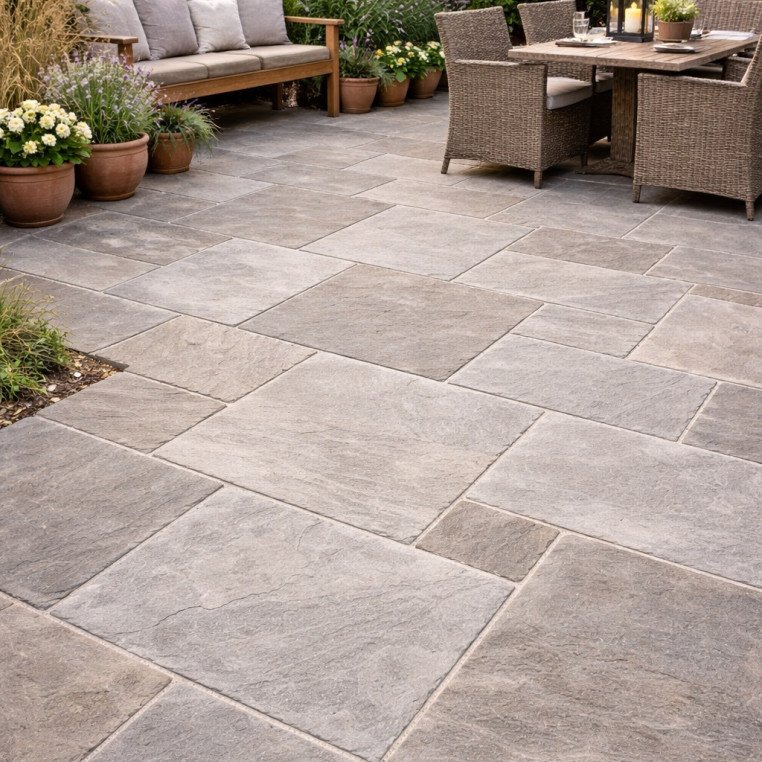
Lay paved areas to a suitable fall to encourage runoff
Include expansion gaps where stone meets rigid structures
Install accurate drips and overhangs on copings and cills
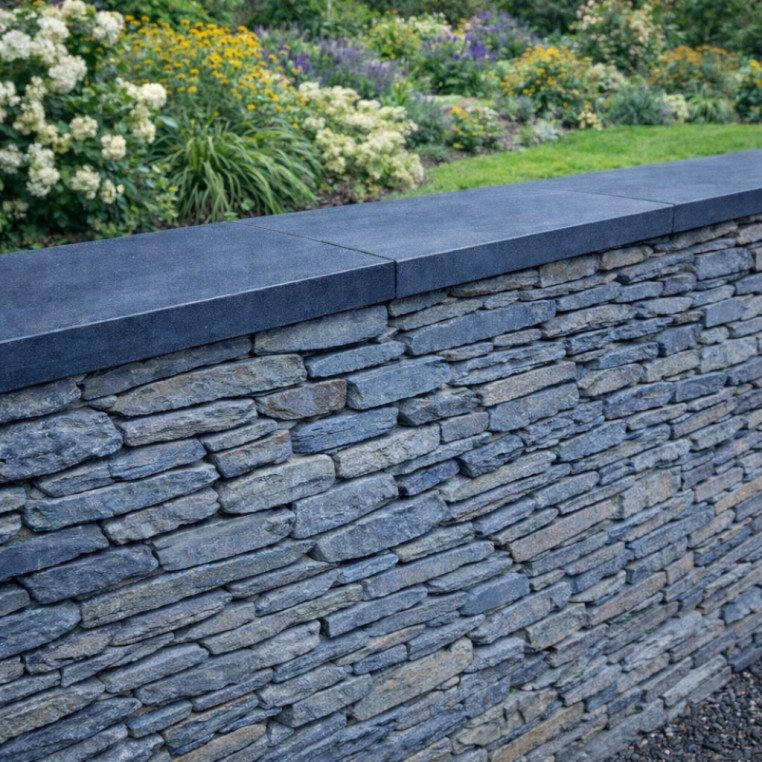
Design walling to direct water away from masonry
Thoughtful detailing ensures the installation performs as beautifully as it looks.
5. Ignoring Natural Colour Variation
Natural stone is valued for its authentic variation in colour, texture and veining. However, failing to manage this variation during installation can create an uneven or unbalanced finish.
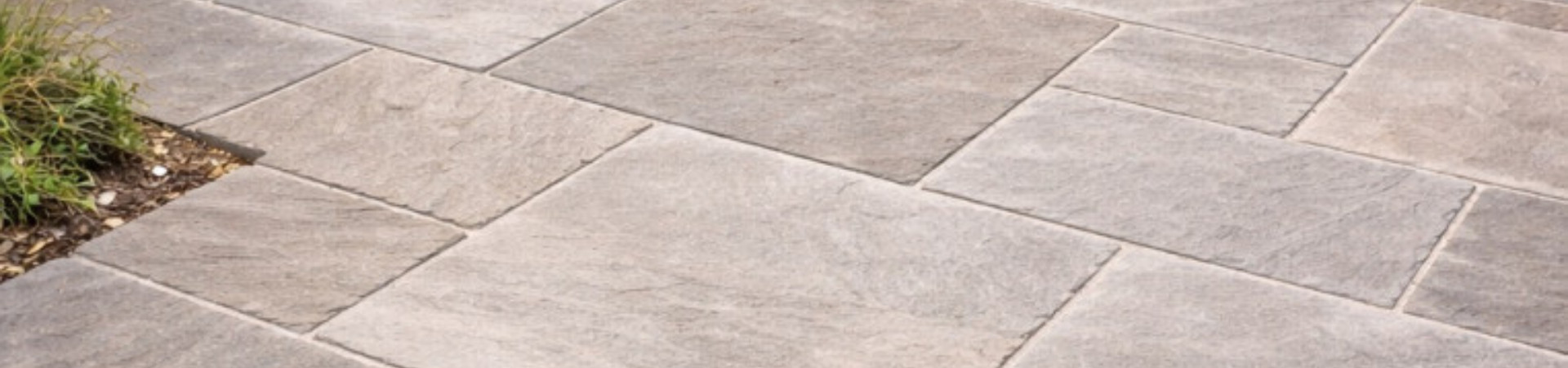
Colour variation shock often occurs when slabs from a single pack are laid in one area without blending.
How to Prevent It
Open and mix multiple packs at once
Dry-lay materials before fixing
Distribute tonal variation evenly across the area
Set aside outliers for less prominent locations
Proactive blending creates a harmonious, professional finish that reflects the intrinsic beauty of the stone.
Install with Confidence and Get It Right First Time
Most natural stone installation problems can be traced back to a small number of preventable mistakes. By investing time in preparation, specifying appropriate materials, planning for drainage and managing variation carefully, tradespeople can deliver installations that endure.
At Stone & Surfaces Direct, we support trade customers with high-quality natural stone and practical guidance grounded in real-world experience. When details are handled correctly from the outset, the finished result reflects true craftsmanship and lasting quality.
Save On Paving Orders
Use the code WINTERPAVING to save money at checkout
Members of the Stone Federation Great Britain
Members of the official trade association for the natural stone industry
Free Samples
Try before you buy. Order multiple free paving samples today
Delivered Direct From The Source
Cut Out The Middleman, Get Our Products Direct From The Source